
If you've never had a pool serviced, it's fair to ask what happens on a visit. A proper service is more than a quick skim with the net. Here's what we do on every Splashbox visit, step by step, and why each part matters for pools in Melbourne's west.
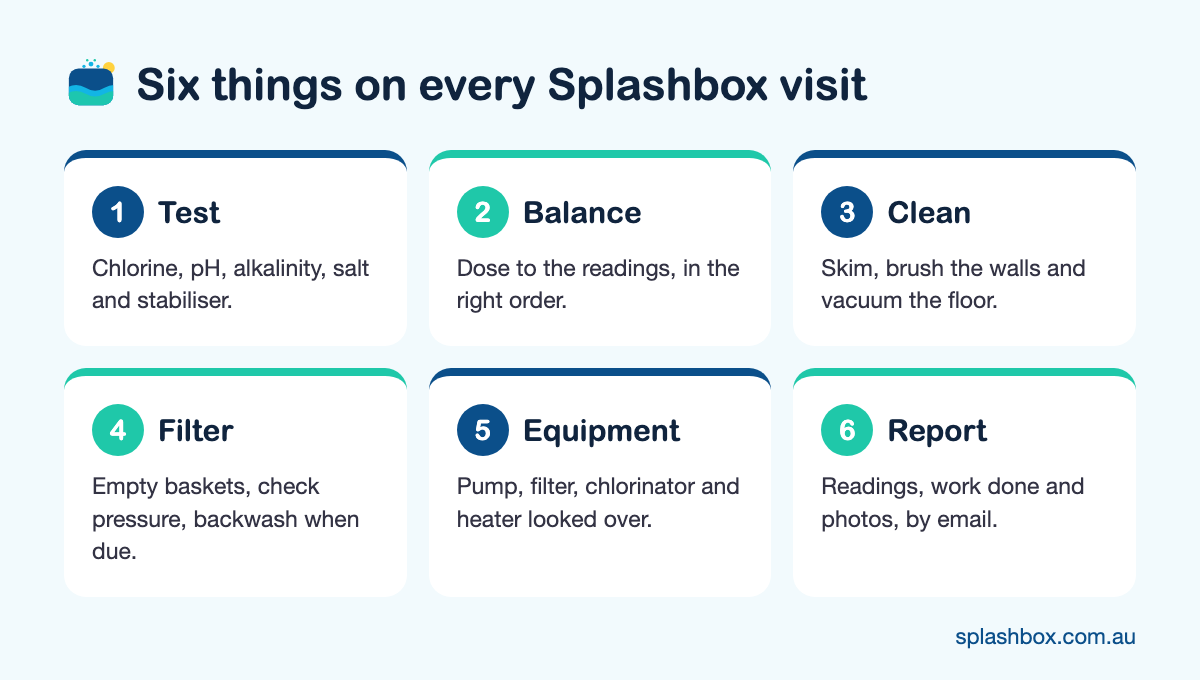
1. We test the water
We test five things on every visit: free chlorine, pH, total alkalinity, salt and stabiliser. Together they tell us whether the water is safe to swim in, whether it's kind to your equipment, and whether anything is drifting out of range.
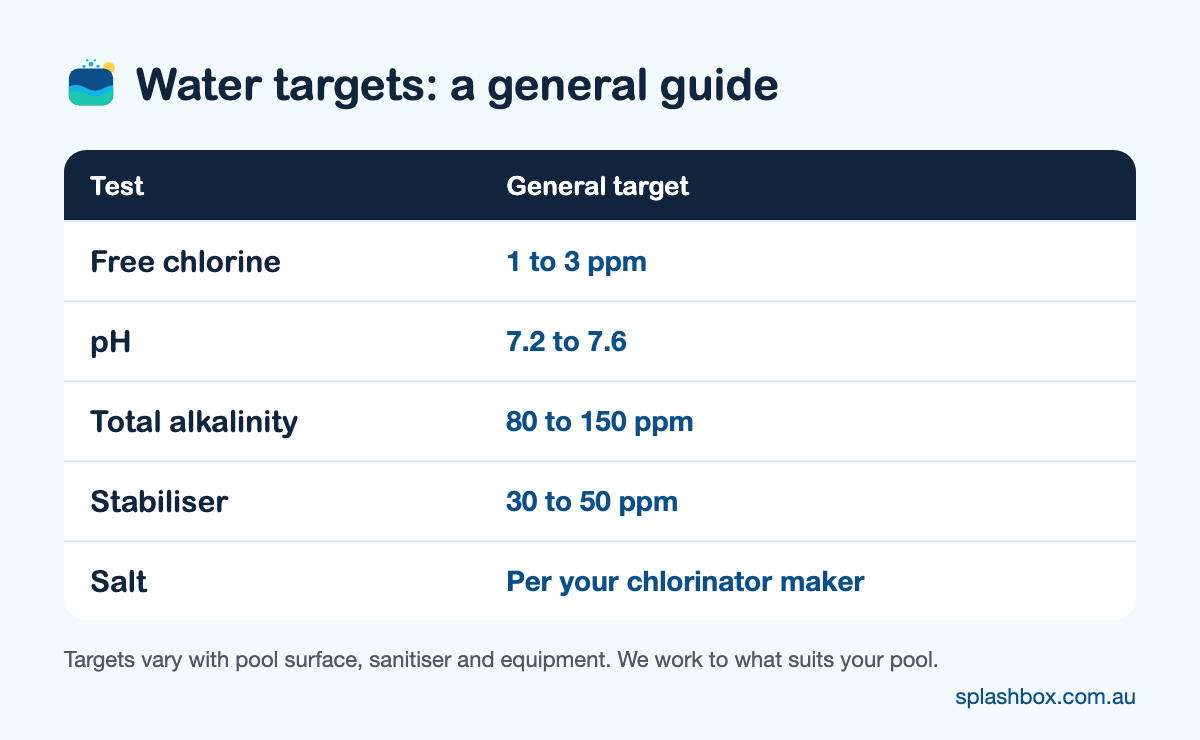
As a general guide, most outdoor home pools aim for roughly:
- Free chlorine: 1 to 3 ppm
- pH: 7.2 to 7.6
- Total alkalinity: 80 to 150 ppm
- Stabiliser (cyanuric acid): 30 to 50 ppm
- Salt: whatever your chlorinator maker specifies, often 4,000 to 6,000 ppm for a standard salt pool. Mineral and low-salt systems run lower.
Your pool's targets can differ depending on its surface, sanitiser and equipment. We work to what suits your pool, not a one-size chart.
2. We balance it
We dose to the readings, not by habit. Chemicals go in the right way, in the right order, with time to circulate. Balance matters for more than clear water. High pH lets scale build up on the chlorinator cell and heater. Low pH can etch pool surfaces and corrode metal parts. Both cost money if they're left.
3. We skim, brush and vacuum
Spring and summer winds in Point Cook and Werribee carry dust, leaves and grit from open ground into the pool. We skim the surface, brush the walls and waterline where needed, and vacuum the floor. Brushing matters: it breaks up the film algae needs to get a hold.
4. We empty the baskets and check the filter
We empty the skimmer and pump baskets and check the filter pressure. When it's due, we backwash a sand or glass filter, or clean the cartridge. A clogged filter means poor circulation, cloudy water and a pump working harder than it should.
5. We check the equipment
We look over the pump, filter, chlorinator and heater. We listen for noisy bearings, look for drips at lids and unions, check the chlorinator's output and cell, and make sure the run time suits the season. If something is wearing out, we tell you early, so you can plan for it instead of dealing with it on the first hot weekend.
Some faults need a licensed trade. Fixed-wired electrical work needs a registered electrical contractor, and gas heaters need a licensed gasfitter. We don't do that work ourselves. We arrange it.
6. You get a visit report
Every visit ends with a report by email: the readings, what we did, photos, and anything to watch. It's saved to your record, so over time you build a history of your pool. That history is what lets small changes get picked up before they become repairs.
How often should a pool be serviced?
On a Care Plan, we visit fortnightly from October to April and monthly from May to September. Warm months burn through chlorine and grow algae faster. Winter slows things down but doesn't stop them, and a pool left alone all winter usually needs a bigger clean in spring.
What a service visit doesn't include
Repairs, parts and bigger jobs such as a green pool rescue are booked separately, and we quote on site before any work starts. On Splash Care, chemicals are charged as used. Splash Care Plus includes standard chemicals.
See a visit for yourself
Book a one-off visit and see how we work, or start a Care Plan. Plans run month to month, with no lock-in, no exit fee and 30 days' notice to cancel. Book online or call 0476 476 080, Monday to Friday, 8am to 6pm.