A salt chlorinator cell makes the chlorine that keeps your pool clean, so when it starts to fade, the water follows. The short answer: most salt cells last somewhere around 3 to 7 years. Some go longer and some fail sooner. How long yours lasts depends mostly on how it's run and how well the water is looked after.
Why the range is so wide
Many makers rate their cells by operating hours rather than years. A cell running long hours on high output in a busy family pool uses up that life faster than one on a small pool with balanced water. The cell's plates carry a special coating that slowly wears away with use. Once it's gone, the cell can't make enough chlorine.
What shortens a cell's life
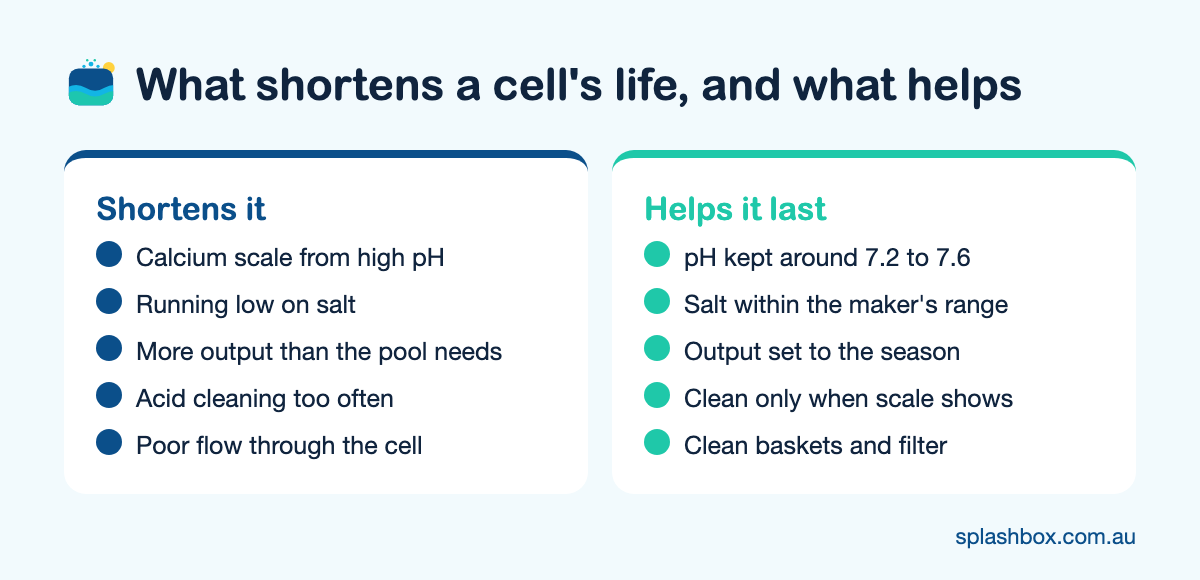
- Calcium scale. High pH and high calcium let white scale build up on the plates. Scale insulates the plates and makes the cell work harder. Concrete pools, especially newer ones, can release calcium into the water, and Point Cook and Werribee have plenty of pools in newer estates.
- Low salt. Running a cell with too little salt can wear the coating faster. Keep salt within the maker's range.
- More output than the pool needs. Running at full output for longer than necessary uses up hours for no benefit.
- Too much acid cleaning. Cleaning a cell too often, or with acid that's too strong, strips the coating.
- Poor flow. A clogged filter, full baskets or air in the line can affect the cell. Many units stop producing when they sense low flow, but it's still a sign something needs fixing.
- Cold water. Many cells are designed to make less chlorine in cold water, and some makers recommend reducing output in winter. Follow the guidance for your model.
Signs your cell is on the way out
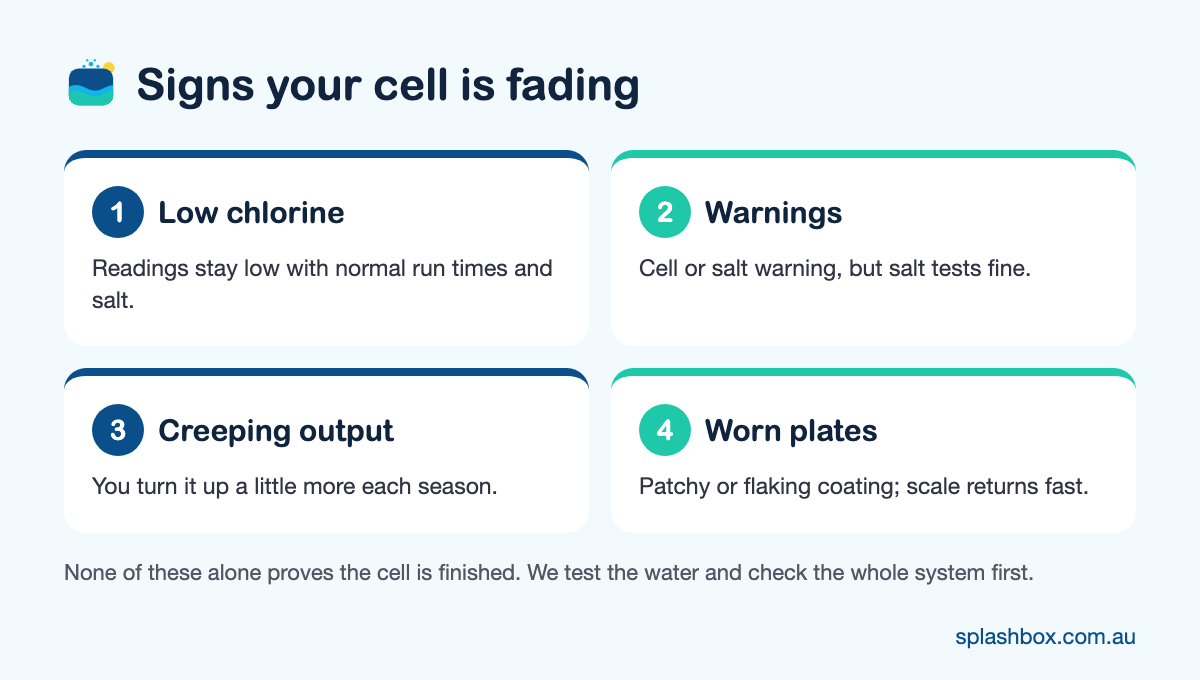
- Chlorine readings stay low even though run times and salt are normal.
- The controller shows a cell, salt or low-output warning, but the salt level tests fine.
- You need to turn the output up a little more each season to get the same result.
- The plates look worn, patchy or have flaking coating, or scale keeps coming back quickly.
None of these on their own proves the cell is finished. Low chlorine can also come from out-of-balance water, low stabiliser, a short run time or a controller fault. That's why we test the water and check the whole system before recommending a new cell.
How to get more years out of it
- Keep pH in range, roughly 7.2 to 7.6 for most pools, to slow scale.
- Test salt regularly and keep it within the maker's specification.
- Set output to what the pool needs, higher in summer and lower in winter.
- Look at the cell every few months. Clean it only when there's visible scale, and follow the maker's instructions.
- Keep the baskets and filter clean so water flows freely through the cell.
Cleaning a cell usually involves a diluted acid solution. Pool acid is hazardous. If you do it yourself, follow the maker's instructions and the label, wear gloves and eye protection, work outdoors, and always add acid to water, never water to acid. If you're not comfortable handling acid, leave it to a professional.
When it's time to replace
A replacement cell needs to match your controller. Some generic cells work with popular brands and some don't, so check the model before buying. If the fault is in the control box rather than the cell, that's a separate repair. Fixed-wired electrical work needs a registered electrical contractor, which we arrange rather than do ourselves.
Not sure how your cell is going?
Book a repair call-out and we'll test the water, check the cell and controller, and give you a fixed quote on site before any work starts. On a Care Plan, we check your equipment as part of the visit and tell you early if the cell is fading. Book online or call 0476 476 080, Monday to Friday, 8am to 6pm.