

Winter is easy on a pool. The water is cold, algae grows slowly and nobody is swimming. Then the days warm up, and a pool that looked fine in August can turn cloudy or green within a week. A spring start-up gets it ready before the first hot weekend, not after.
In Point Cook and Werribee, spring brings strong winds that carry dust and leaves into the pool, and the odd hot northerly day well before summer proper. Late September to October is a good time to start. Here's the checklist.
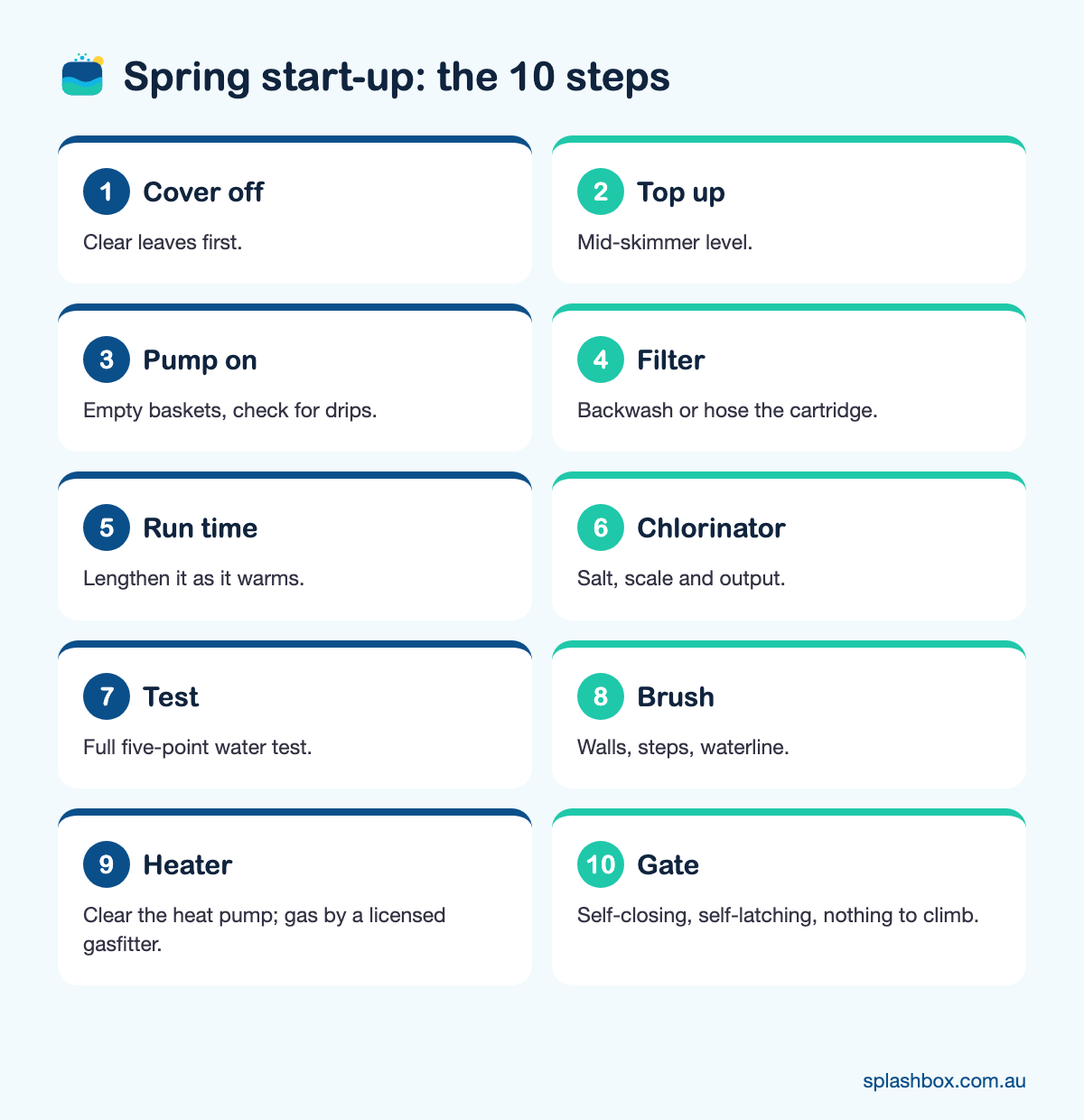
1. Clear the cover and the pool
If you use a cover, sweep or hose the leaves off it before you roll it back, so the debris doesn't end up in the water. Clean the cover and let it dry before storing it. Then scoop out leaves and anything else that has settled over winter.
2. Top up the water
The water level should sit around the middle of the skimmer opening. Too low and the pump can suck air. Too high and the skimmer can't do its job.
3. Empty the baskets and start the pump
Empty the skimmer and pump baskets, then start the pump. Watch for drips at the lid, unions and valves. If the pump struggles to prime, an air leak is a common cause, often a worn or dry lid O-ring. A pump that hums but won't spin, or trips the power, needs a repair. Don't open the electrics.
4. Clean the filter
Backwash and rinse a sand or glass filter, or take out and hose down the cartridge. Check the pressure gauge once it's running. Filter sand that has been in for many years may be due for a change, and a cartridge that's torn or flattened should be replaced.
5. Lengthen the run time
Most pools run shorter hours in winter. In summer, the pump needs to run long enough to filter all the water at least once a day. For many home pools that means somewhere around 6 to 10 hours a day, depending on the pump and pool size, with more on hot days. Step it up as the weather warms.
6. Check the chlorinator
Check the salt level against the maker's specification and top up if needed. Look at the cell for white scale. Many chlorinators make less chlorine or show warnings in cold water, and output that was turned down for winter needs to come back up for summer.
7. Test and balance the water
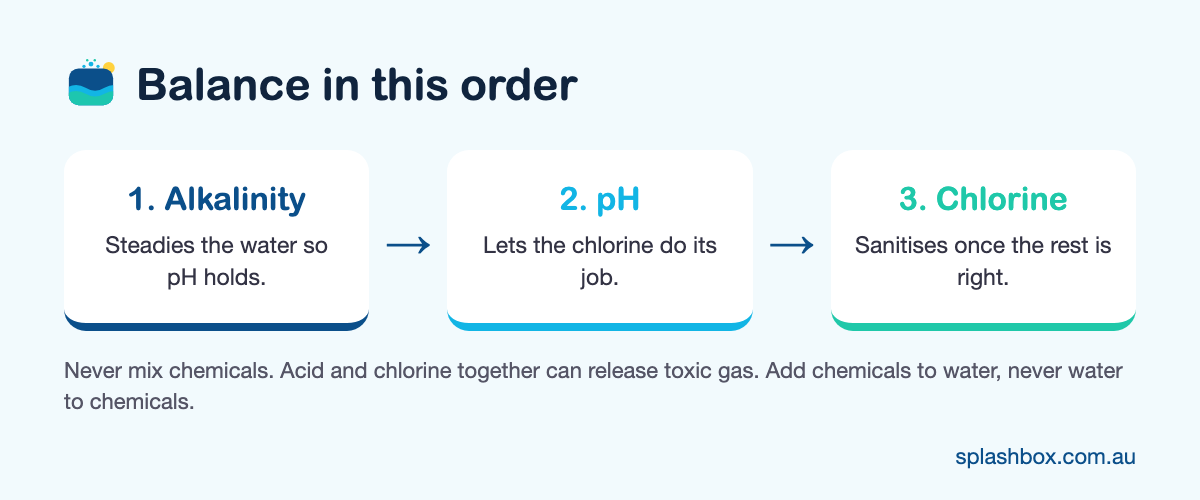
Get a full test: free chlorine, pH, total alkalinity, salt and stabiliser. Balance alkalinity first, then pH, then chlorine. If you handle chemicals yourself, read the label, keep them in their original containers, store them apart and never mix them. Acid and chlorine together can release toxic gas. If you're not sure, leave it to a professional.
8. Brush and vacuum
Brush the walls, steps and waterline, then vacuum the floor. Brushing loosens the film that algae uses to take hold, and spring is when it tries.
9. Check the heater
Clear leaves and debris away from a heat pump so air can flow. Gas heaters should be serviced by a licensed gasfitter. We can arrange that, but we don't do gas work ourselves.
10. Check the gate and barrier
Make sure the gate self-closes and self-latches from any open position. Move pot plants, chairs, barbecues and anything else a child could climb on away from the fence. In Victoria, pools and spas must be registered with your local council and the barrier must be inspected and certified on a regular cycle. Your council can tell you where you stand. Barrier inspections are done by a registered inspector, not a pool service.
Want it done for you?
A spring start-up books as a one-off clean. We test, clean, balance, check the equipment and send you a visit report. Or start a Care Plan and keep it that way, with fortnightly visits from October to April, no lock-in and no exit fee. Book online or call 0476 476 080, Monday to Friday, 8am to 6pm.